
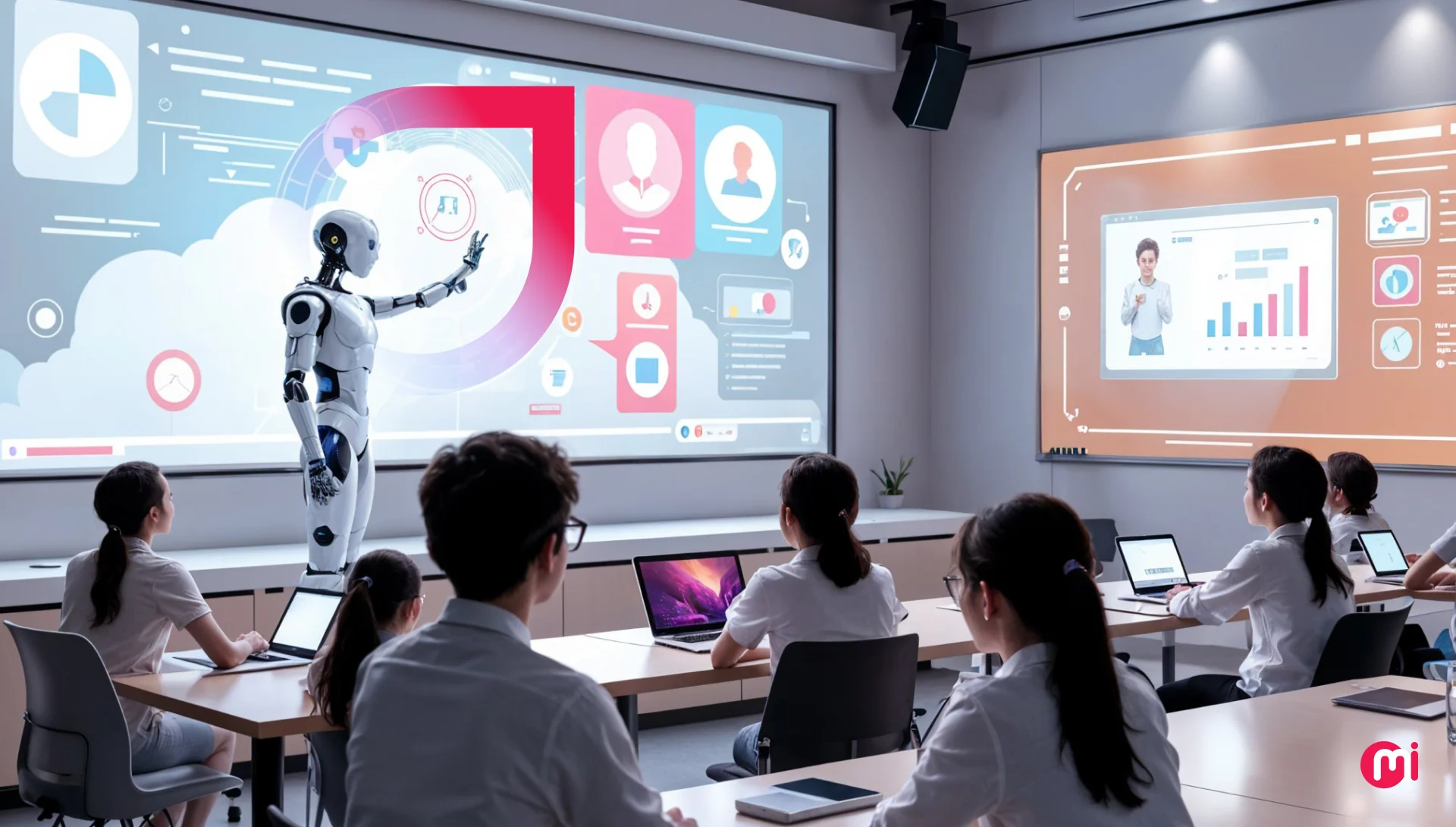
AI has revolutionized the field of education with its wide range of applications, including personalized learning, automated assessment, efficient administration, ongoing assistance, and more. These use cases have transformed the way educators teach and learners learn in educational institutions. In this article, we will delve into the top 8 use cases of AI in education, provide real-life examples, and highlight the key benefits, helping you understand how AI can enhance your institution’s goals.
In the ever-evolving landscape of technology, educational institutions are leveraging AI to create smarter classrooms that enhance the learning experience for both educators and students. With its diverse applications such as seamless workflow management, personalized content delivery, automated assessment and grading, and continuous learner support, AI has become an indispensable tool for modern education.
Prominent examples of AI in education, such as Coursera, Duolingo, and AltSchool, showcase how AI is revolutionizing the way schools operate, teachers impart knowledge, and students acquire information. These platforms are simplifying education and making it more accessible and convenient, aligning with the evolving needs of both educators and learners.
A multitude of schools, universities, and educational institutions are adopting AI-driven solutions like intelligent tutoring systems, chatbots, and learning analytics to optimize teaching methods and enhance student engagement. This article explores the top 8 AI use cases in education that can cater to your specific requirements.
The Importance of AI in Education
While AI has been a part of the educational landscape since the introduction of systems like Stanford’s PLATO in 1965, its significance in mainstream eLearning gained momentum in the late 2000s. The post-COVID-19 era witnessed a rapid acceleration in the adoption of digital learning tools and cloud-based AI solutions, further propelling the integration of AI in education.
With advancements in Natural Language Processing (NLP) and computer vision, AI applications have expanded to include adaptive learning, personalized content delivery, and automated assessments. From data-driven decision-making for tailored education to remote learning and continuous support, AI has become an essential component of modern education, aligning educational institutions with the current needs of learners.
Differences Between Traditional And AI-Powered Classrooms
Before delving into the use cases, it is essential to understand the distinctions between traditional education and AI-enabled learning. The table below highlights the key differences between the two approaches, making it easier to comprehend the shift towards AI-powered classrooms:
– Teaching Method: Traditional education is teacher-centered, while AI-powered classrooms are student-centered.
– Learning Customization: Traditional education offers limited customization, whereas AI-powered classrooms provide highly personalized learning experiences.
– Learning Pace: Traditional education follows a fixed pace, whereas AI-powered classrooms adapt to individual learning speeds.
– Feedback & Assessment: Traditional education relies on manual grading and feedback, whereas AI-powered classrooms automate grading and provide instant feedback.
– Resource Accessibility: Traditional education has limited access to resources, whereas AI-powered classrooms offer extensive online resources and content.
– Engagement: Traditional education engagement varies based on the teacher, while AI-powered classrooms enhance engagement through interactivity.
– Data Analysis: Traditional education has limited data analysis capabilities, whereas AI-powered classrooms use advanced data analytics for insights.
– Accessibility & Flexibility: Traditional education requires physical presence, while AI-powered classrooms offer remote and flexible learning options.
– Cost: Traditional education is associated with lower costs, whereas AI-powered classrooms are more expensive due to technological implementations.
8 Top Use Cases of AI in Education
AI in education offers a range of benefits, including streamlined workflow administration, automated assessment and grading, personalized learning, assistance, and more. Let’s explore each of these use cases to understand how AI is reshaping modern education:
1. AI-Powered Administrative Workflows: AI automates administrative tasks such as research, paper organization, homework assessment, grading, report management, and presentation creation. It analyzes student data to aid in curriculum planning, streamlines enrollment processes, and reduces the administrative burden on educators and institutions.
2. Automated Assessment and Grading: AI-powered software solutions automate assignment assessment and grading, from multiple-choice tests to written answers, providing quick and objective feedback to students. This streamlines tasks, ensures accuracy, and saves teachers valuable time.
3. Learning Personalization: AI-powered personalized learning platforms and intelligent tutoring systems assess individual student needs and customize learning pathways, content difficulty, and pacing accordingly. By adapting content and tasks to each learner’s strengths, weaknesses, and progress, AI personalizes the learning experience.
4. Learning Outcomes Prediction: AI employs predictive analytics to identify at-risk students and recommend timely interventions. By analyzing students’ attitudes, academic performance, and social conditions, AI categorizes learners into different archetypes and helps educators tailor teaching methods and programs based on individual skills and needs.
5. Assistance for Needy Students: AI plays a vital role in creating inclusive classrooms by supporting students with disabilities or learning challenges. Tools like Microsoft Immersive Reader assist students with dyslexia, visual impairments, or language barriers by providing text-to-speech, word breakdown, and translation features, making lessons more accessible.
6. Resource Planning Software: Resource planning software, also known as school ERP (Enterprise Resource Planning), centralizes various administrative and academic functions to facilitate efficient data management and communication among stakeholders. Platforms like Ellucian Banner exemplify resource planning software for educational institutions.
7. Curriculum Design Solutions: AI helps educational institutions design curricula by analyzing educational data to identify trends and gaps for optimized learning outcomes. It suggests adjustments and updates to curricula based on real-time insights and evolving educational standards, ensuring that educational content remains relevant and up-to-date.
8. Ongoing Assistance During Learning: AI provides learners with 24/7 access to study materials, enabling learning from anywhere at any time. AI chatbots and teaching assistants offer continuous support, answering common questions and guiding learners through course content, fostering a seamless learning experience.
Real-Life Examples of AI in Education
Several real-life examples illustrate the application of AI in education, providing insights into how AI is transforming the learning landscape:
1. Duolingo: Duolingo uses AI to personalize language learning by customizing lessons based on individual preferences, performance, and learning styles. The platform’s AI system has contributed to a 30% increase in learner retention by delivering personalized lessons and incorporating gamification to enhance user engagement.
2. IBM Watson Education: IBM Watson’s AI solutions personalize the learning experience by offering tailored resources and virtual tutoring. With predictive capabilities, Watson helps educational institutions improve student outcomes by identifying students in need of additional support, resulting in a 20% enhancement in student performance metrics.
3. Coursera: Coursera utilizes AI algorithms to provide personalized course recommendations to learners based on their interactions and preferences. The platform analyzes user behavior data to track learner progress, offering personalized guidance that increases the likelihood of course completion by 35%.
4. AltSchool: AltSchool integrates AI into its educational model to design personalized curricula that adapt to individual student progress. By personalizing learning journeys, AltSchool has seen a 25% increase in student engagement, demonstrating the effectiveness of AI in enhancing the learning experience.
5. Quizlet: Quizlet leverages adaptive learning techniques powered by AI to create customized study plans for students. By analyzing student progress and focusing on areas that need improvement, Quizlet has reported a 40% increase in retention rates compared to traditional study methods.
Benefits of AI in Education
AI offers numerous benefits in education, including:
– Efficient Administrative Tasks: Automation of repetitive administrative tasks like scheduling and grading.
– Personalized Learning at Scale: Tailoring lessons and pacing to individual student needs.
– Reduced Teacher Workload: Automating routine tasks to free up teachers’ time.
– 24/7 Learning Support: Providing continuous assistance to students through virtual assistants.
– Data-Driven Insights: Analyzing student performance data to improve decision-making.
– Greater Accessibility and Inclusion: Enhancing learning experiences for all students.
– Enhanced Student Engagement: Providing interactive and gamified learning experiences.
– Optimized Resource Allocation: Efficiently managing budgets and resources.
– Continuous Improvement of Curriculum: Tracking student interactions to refine course content.
Bring AI to Your Classrooms with MindInventory
As a leading AI development company, MindInventory offers education software development services tailored to the unique needs of educators. Whether you require custom EdTech development, integration with existing digital ecosystems, or modernization of outdated education software, MindInventory has the expertise to deliver. Our team of experienced AI/ML engineers can bring your education software ideas to life, ensuring a seamless and innovative learning experience for students.
If you are looking to integrate AI into your educational institution’s curriculum, contact MindInventory’s experts for comprehensive assistance. With a proven track record of success in upgrading education software, MindInventory can help you achieve significant outcomes and enhance the learning experience for students.
FAQs:
1. How is AI transforming traditional classroom learning?
AI is revolutionizing traditional classroom learning by automating administrative tasks, tailoring education, and enhancing student engagement. Through data analysis and personalized learning experiences, AI improves understanding and retention among students.
2. Can AI replace teachers in the future?
While AI can significantly enhance the learning experience by automating tasks and providing insights, it cannot replace the human element of teaching. The critical aspects of empathy, emotional support, and critical thinking are essential elements of teaching that AI cannot replicate.
3. How can educational institutions integrate AI into their curriculum?
Educational institutions can start by incorporating AI topics into lessons, utilizing AI-powered tools like chatbots, and providing training to teachers. Clear goals, good data, and effective staff training are essential for successful integration. For specialized AI-enabled education software, collaborating with an AI ML development company is recommended.
4. What are the challenges of AI in education?
AI in education presents challenges such as security and data privacy, algorithmic bias, over-reliance on technology, and the need for training and adaptation. Addressing accessibility issues, ethical concerns, and potential dehumanization of the learning experience are crucial when implementing AI in education.