
Grounding techniques are essential in today’s fast-paced world to combat stress and anxiety. It can be challenging to escape the constant worries and fears that plague our minds. However, learning how to ground yourself can significantly reduce anxiety and promote a more peaceful and joyful life. Below are seven simple yet effective grounding methods to help you ease anxiety and feel more centered.
Breath Focus:
Harnessing the power of your breath is one of the most straightforward ways to get grounded. By focusing on your breath and engaging in slow, deliberate inhalations and exhalations through your nose, you can activate your body’s natural relaxation response. This practice has been scientifically proven to reduce stress and induce a sense of calm. Pay attention to the sensation of air flowing through your nostrils, taking deep breaths while mentally acknowledging each inhale and exhale. Visualize your entire body breathing in as you inhale, expanding and then exhaling out through your feet to ground yourself in the present moment.
Feel Your Feet on the Ground:
Reconnecting with your feet can provide a profound sense of safety and stability. Try this simple exercise to feel more grounded:
- Sit or stand with both feet flat on the ground, uncrossed.
- Focus on the sensation of your heels and soles touching the ground, feeling the support beneath you.
- Press one foot, then the other, firmly into the ground, engaging your thighs, and then both feet simultaneously.
- Observe how these movements affect your posture and spine, noticing the solid connection of your feet to the earth.
Continuing this practice until you feel a sense of grounding in your lower legs can help bring you back to the present moment and promote feelings of calm.
Practice Earthing:
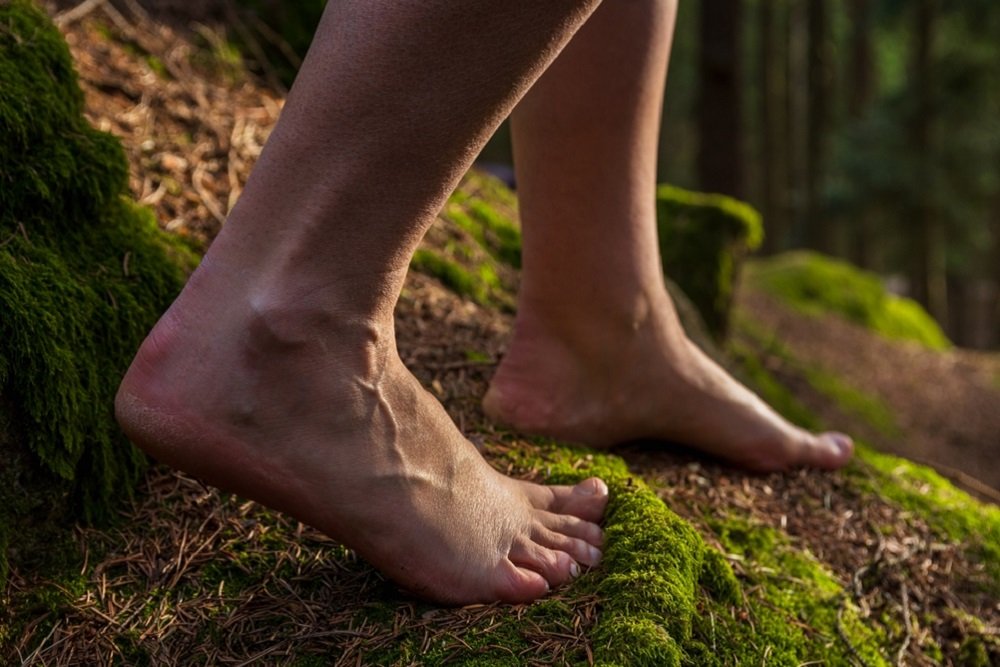
Earthing, also known as grounding, involves connecting your bare skin to the earth. Studies have shown that this practice can have significant effects on your health, including reducing inflammation, alleviating pain and stress, increasing blood flow, improving sleep and energy levels, and supporting overall well-being. By allowing your body to connect with the earth’s natural electric charge, earthing helps balance your body’s electrical energy, similar to grounding an electrical outlet to prevent overload. This balancing act can help calm your body and mind, acting as a reset button for stress. Outdoor surfaces like soil, grass, sand, water, and concrete are ideal for practicing earthing.
Try the 5-4-3-2-1 Technique:
The 5-4-3-2-1 technique is a practical exercise that aims to calm the nervous system by engaging your senses. This technique shifts your focus from anxiety triggers to exploring your current sensory experiences, redirecting your brain’s stress response and anchoring you in the present moment. The steps involved in this technique include:
- Acknowledge five things you see in your environment.
- Acknowledge four things you can touch around you.
- Acknowledge three things you hear nearby.
- Acknowledge two scents you can smell.
- Acknowledge one taste you can identify.
Engaging all five senses through the 5-4-3-2-1 technique can help bring you back to the present moment, reducing anxiety and promoting a sense of grounding and calm.
Get Moving:
Exercise is a proven method for reducing anxiety by releasing endorphins, natural mood-boosting chemicals that help alleviate stress. Simple exercises like jumping jacks, jumping rope, jogging, or stretching can help you get out of your head and back into your body. Pay attention to the sensations in your feet and hands as you move, enhancing the stress-relieving benefits of exercise and keeping you anchored in the present moment.
Drink Water:
Staying hydrated is essential for regulating stress hormones, supporting nervous system function, and promoting overall well-being. Drinking water can be a grounding technique in itself, as the sensation of water flowing down your throat can bring you back into your body and ease tension.
Pick Up and Hold Onto Something:
Examining an object closely can be a powerful grounding technique. Take a moment to pick up an object nearby and observe its characteristics, such as texture, weight, and temperature. Paying attention to the details of the object can anchor you in the present moment, reducing stress and anxiety.
These grounding techniques are simple yet effective ways to reduce stress and anxiety. Experiment with them to find what works best for you and make them a regular practice to cultivate a more peaceful and centered experience, regardless of life’s challenges.
References:
- ERIC – Emotion Dysregulation and Anxiety in Students: Mindfulness Strategies for School Counselors, Georgia School Counselors Association Journal, 2020
- How Breath-Control Can Change Your Life: A Systematic Review on Psycho-Physiological Correlates of Slow Breathing
- Effect of breathwork on stress and mental health: A meta-analysis of randomised-controlled trials | Scientific Reports
- The Effect of Diaphragmatic Breathing on Attention, Negative Affect and Stress in Healthy Adults – PMC
- The effects of grounding (earthing) on inflammation, the immune response, wound healing, and prevention and treatment of chronic inflammatory and autoimmune diseases – PMC
- Grounding – The universal anti-inflammatory remedy – PMC
- The Effect of Earthing Mat on Stress-Induced Anxiety-like Behavior and Neuroendocrine Changes in the Rat
- Earthing: Health Implications of Reconnecting the Human Body to the Earth’s Surface Electrons – PMC
- The Effects of Grounding (Earthing) on Bodyworkers’ Pain and Overall Quality of Life: A Randomized Controlled Trial
- What Surfaces Can I Be Grounded On? | BeGrounded
- Regular exercise is associated with emotional resilience to acute stress in healthy adults
- Effects of Exercise and Physical Activity on Anxiety – PMC
- Water, Hydration and Health – PMC
- Effects of Dehydration and Rehydration on Cognitive Performance and Mood among Male College Students in Cangzhou, China: A Self-Controlled Trial – PMC
Grounding techniques are essential for reducing anxiety and promoting a more peaceful and centered life. Experiment with these methods to find what works best for you and incorporate them into your daily routine for optimal stress relief and well-being.