
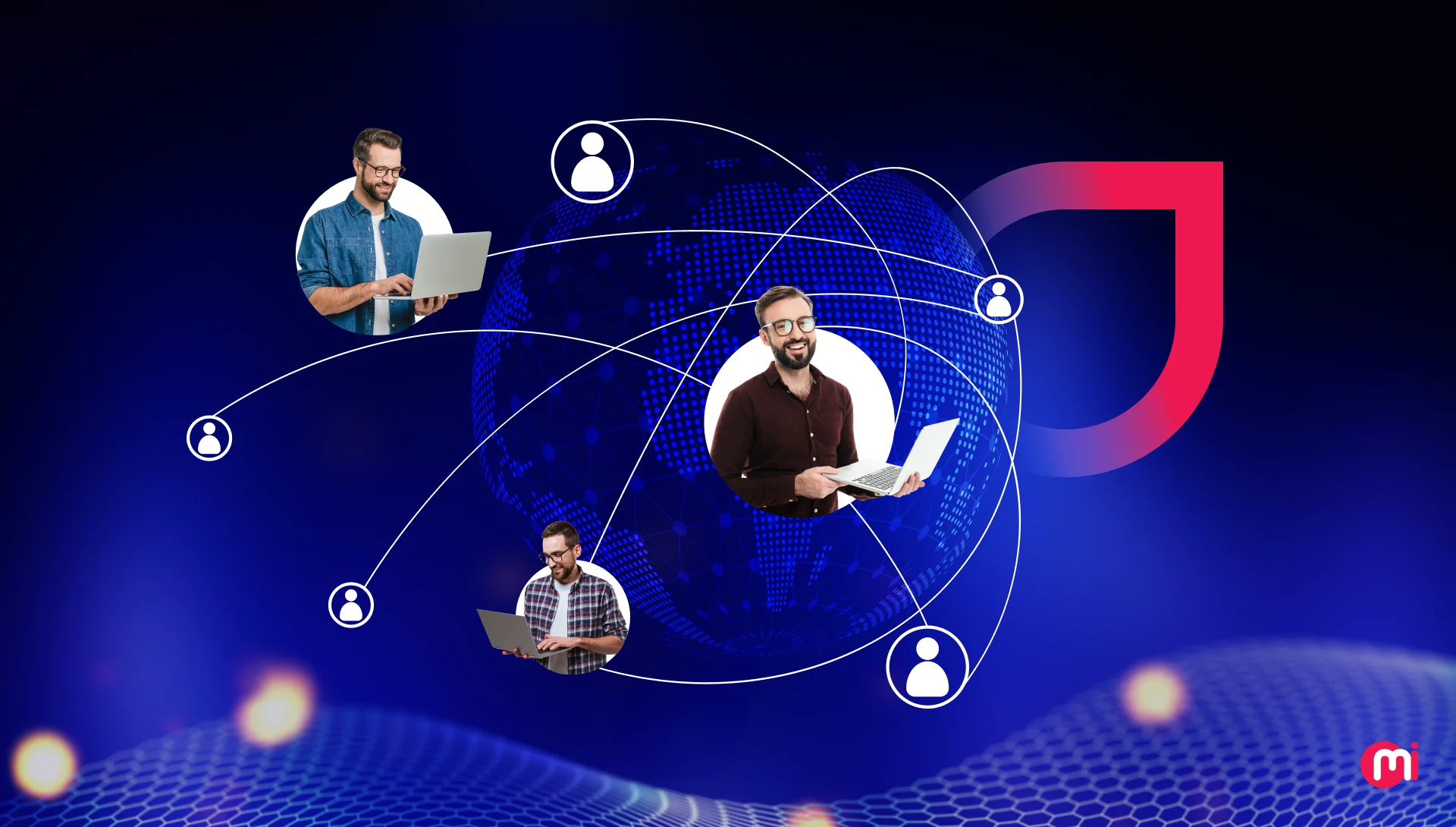
In the year 2025, the business landscape is undergoing a significant transformation. Agility, innovation, and access to specialized talent are now paramount for companies, overshadowing traditional notions of size and geography. IT outsourcing has emerged as a crucial driver of growth, resilience, and digital transformation in this new era.
From advanced automation powered by AI to hybrid collaboration models, outsourcing is revolutionizing how organizations operate, grow, and compete. The focus has shifted from cost savings to rapid innovation, as global teams, cloud systems, and digital platforms converge to redefine how work is accomplished in a connected world.
This article delves into the top 10 IT outsourcing trends that are expected to shape the landscape in 2025. These trends will not only transform workplaces but also influence business strategies and create new dynamics in the future of work.
Key Takeaways:
1. The significant IT outsourcing trends shaping the future of work in 2025 and beyond.
2. How technology-driven trends like AI, automation, cloud, edge computing, and IoT are revolutionizing outsourcing services.
3. Strategic approaches such as outcome-based contracts, access to specialized talent, and agile models driving measurable impact.
4. Emerging and ethical considerations, including remote work, sustainable practices, and global talent ecosystems.
5. The leading countries in the outsourcing boom, such as India, Ukraine, Poland, Mexico, the Philippines, and Argentina.
The Next Era of IT Outsourcing: Market Overview
The IT outsourcing industry is undergoing a profound transformation. What was once primarily a cost-saving measure has evolved into a strategic lever for innovation, agility, and competitiveness.
Enterprises are no longer evaluating software development outsourcing services solely based on price; they now prioritize the ability to deliver specialized talent, drive automation, manage risks, and enable digital transformation at scale.
Key Market Insights:
– The global IT outsourcing market is projected to reach USD 588.38 billion by 2025, with a compound annual growth rate (CAGR) of 6.51% through 2030.
– By 2030, the market is expected to reach USD 806.55 billion, emphasizing its role in global digital transformation.
– The United States is set to dominate the market, generating the highest revenue of US$218.02 billion in 2025.
– India continues to thrive in the IT outsourcing market, offering a skilled workforce and cost-effective solutions.
These figures underscore a fundamental shift: outsourcing software development projects is no longer just a tactical choice but a strategic pillar of enterprise competitiveness in a digital-first economy.
Prominent IT Outsourcing Trends Transforming the Market
There are three main types of IT outsourcing trends reshaping the industry: technology-driven trends, strategic and operational shifts, and emerging and ethical trends. Together, these dynamics are transforming the global outsourcing market into a strategic cornerstone for modern enterprises.
Technology-Driven IT Outsourcing Trends:
1. AI and Automation: AI-powered systems are transforming how businesses operate, enabling faster turnaround times, reduced errors, and scalable operations.
2. Cloud Services and Hybrid Infrastructure: Businesses are leveraging IT outsourcing partners to adopt cloud solutions for agility and resilience.
3. Cybersecurity and Risk Management: Modern risk management methods are critical for addressing cyber threats and ensuring business continuity.
4. Edge Computing and IoT Integration: Edge computing and IoT are reshaping IT infrastructure strategies, providing new business opportunities.
Strategic and Operational Trends:
5. Outcome-Based and Value-Driven Contracts: Companies are moving towards outcome-based contracts to measure success by impact rather than effort.
6. Specialized Talent Access: The demand for specialized talent access is growing as enterprises seek niche expertise for advanced technologies.
7. Digital Transformation Support: Outsourcing partners are becoming strategic enablers of digital transformation, offering end-to-end solutions.
8. Agile and Flexible Outsourcing Models: Modular engagement frameworks are replacing long-term commitments, enabling scalability and innovation.
Emerging and Ethical Trends:
9. Ethical Outsourcing: Ethics and responsibility are becoming core priorities in outsourcing partnerships, emphasizing fair labor practices and sustainability.
10. Remote Work: Outsourcing providers are supporting remote collaboration, enabling seamless operations across geographies.
Emerging Outsourcing Countries Leading the Transformation:
1. India: A hub for software development and digital capabilities.
2. Ukraine: Known for high-quality software engineering and cybersecurity expertise.
3. Poland: Europe’s outsourcing powerhouse, offering innovation and accessibility.
4. Mexico: Gaining prominence as a nearshoring destination with agile collaboration.
5. Philippines: Leading in customer support and expanding into IT services.
6. Argentina: Standout in Latin America for software engineering and data science.
Final Thoughts:
The convergence of automation, cloud-first strategies, and specialized outsourcing is reshaping productivity in the business world. Organizations that embrace these IT outsourcing trends will not only survive change but drive it. By viewing outsourcing as a strategic partnership focused on growth and innovation, businesses can thrive in the digital economy.
MindInventory: A Trusted IT Outsourcing Partner for Your Business
MindInventory is a leading software development company specializing in web, mobile, and cloud-based solutions. With expertise in various technologies, including JavaScript frameworks, AI & ML, and mobile app development, MindInventory delivers scalable, secure, and high-performance software tailored to diverse business needs.
FAQs on IT Outsourcing:
1. What is IT outsourcing?
IT outsourcing involves hiring external providers to handle technology-related functions such as software development and infrastructure management.
2. What are IT outsourcing services?
IT outsourcing services include software development, cloud management, cybersecurity, and digital transformation consulting, tailored to a company’s needs.
3. What are the types of IT outsourcing?
The main types of IT outsourcing include onshoring, nearshoring, and offshoring, with various models like staff augmentation and fully managed services.
4. How does IT outsourcing benefit businesses?
Outsourcing helps businesses reduce costs, access specialized talent, accelerate project delivery, and innovate faster with external expertise.
5. Which IT services should be outsourced?
Commonly outsourced services include software development, cloud infrastructure, AI integrations, technical support, and maintenance, among others.
6. Is it cheaper to outsource IT services?
Yes, outsourcing is often more cost-effective than maintaining large in-house teams, reducing expenses and providing flexible services.
7. Which are the biggest IT outsourcing companies?
Some of the biggest IT outsourcing companies globally include MindInventory, Accenture, TCS, Infosys, IBM, Cognizant, and Capgemini, offering a range of services supporting diverse industries.
In conclusion, the future of IT outsourcing is bright, with a focus on innovation, agility, and strategic partnerships driving digital transformation. By harnessing the power of outsourcing and leveraging specialized talent, businesses can stay ahead of the curve and thrive in the evolving digital landscape.